Wednesday, December 21, 2016

ROE STILL WRITING ABOUT NW


I APOLOGIZE TO MY READERS, AS I ADDED ONLY TWO BLOGS RECENTLY.
EXCUSES:  I SPENT MORE TIME AT BLAKELY ISLAND (SEE ABOVE) IN THE LOVELY SUMMER AND FALL OF THE PACIFIC NORTHWEST. Actually, this is also one of my published books that helps the reader to live vicariously on a San Juan Island with me and my family for more than thirty years.  Local summer residents (as we were, too) appealed to me to write a book about the island before all of the old-timers passed on. To my surprise, many strangers also have ordered this book from  booksellers and national  wholesalers.  Enough about why I loafed too much this summer.

In the following months I will continue sharing with you the writing of my 17 books, 10 of which are still in print, two of them recently published: THE SAN JUAN ISLANDS: INTO THE 21ST CENTURY (Caxton 2011) and THE COLUMBIA RIVER (Caxton 2013); Ongoing books that continue to be popular are: NORTH CASCADES HIGHWAY and GHOST CAMPS & BOOM TOWNS (from NW only), the latest two of the K-5 Marco the Manx series called ALASKA CAT and SAMURAI CAT (Montevista Press), RANALD MacDONALD (WSt.U Press) STEVENS PASS (lots of RR history), and several other titles out of print. One of the older books was made into a two-hour TV documentary for TV Asahi Japan) and is in the Smithsonian Collection, and so on.

AS FOR ME, I continue to be asked to travel occasionally to research magazine articles of diverse types, another possible video or movie, and another  book, maybe.  I ASK OF YOU THAT YOU WILL RETURN TO  MY WRITINGS AND OVERLOOK MY SCARCE OUTPUT. THANK YOU TO MY READERS OVER  YEARS PAST. www.joannroe.com for more. It is informational and not a sales site.


Saturday, October 8, 2016

SAN JUAN ISLANDS NORTHWEST VACATIONLAND


Mount Baker in the massive North Cascades Range of Washington State is visible from most of the northwest, including the San Juan Islands that are scattered across the Salish Sea between Bellingham WA and the popular city of Victoria BC. The geologists and geographers say there are 172 such US islands, but only four of them are served by Washington State Ferries, These  are large vessels the size of small cruise ships for cars and trucks, people and all else from Anacortes to the port of Victoria on Vancouver Island . The rest of us get to our cabins on  the smaller islands by people-only boats from Anacortes WA or Bellingham (hundreds of personal boats). Others fly to small airstrips by private pilots or the few commercial airlines of various sizes. Once there and have unloaded the groceries one has a delicious feeling of being remote, of few cars and limited marinas or stores, but more crab pots, kayaks, orcas and even humpback whales at seasons. It is a collection of places where residents can temporarily forget the hubbub of commerce. The area has year-round moderate temperatures with ideal climates from about May to October from the 60s to 80s and in winter still in the 40s and 50s with the rainy season only less than 30 inches over a six-month period mostly, virtually 0 inches in the dry season.

My own extended family has had a toehold on one delightful island area for fully fifty years, with the generations continuing to spend summer sun on the beaches digging for geoducks or swimming in small lakes on an upper island site, setting out crab pots or hiking on old logging trails that have gradually been reinvaded by wild strawberry patches or pesky blackberry vines (with yummy berries galore in late summer). Dinners are late in this far northwest, making it possible to enjoy radiant sunsets framing the sky.

Relatively few native Americans settled on the islands, preferring to make them a source of hunting and fishing forays, partly because the Washington tribes were wary of northerly groups who came without warning from western Canada or Alaska in their 11-man war canoes to carry off the locals as slaves when they could. But that was a long time ago, and today the groups meet to have canoe races and barbecued salmon, instead.  In the upcoming posts I will tell you more about those early days and more.  The same publishers who told you about The Columbia River published my book about the later years of the SJI, San Juan Islands:Into the 21st Century. Even though I thought I knew everything about these lovely places by just living there part-time, I found I had to do much research and many personal interviews with residents to truly know what had happened in the last 75 years or so.

Monday, August 22, 2016

DEVELOP THE ART OF PHOTOGRAPHY


A typical magazine journalist is expected to develop the skill of creating interesting photography to illustrate his/her stories for magazines. Photography is tied deeply to becoming conscious of the sky, the weather, the lands that surround you. The image above is from California near Palm Springs, where towering mountains separate the maritime and the desert worlds. In a recent trip the clouds were hypnotic. Above gentle clouds danced across the blue sky, even as menacing dark and dangerous-looking systems climbed over the mountain tops to threaten the terrain facing me, looming higher in the blue sky every moment The darkening scene turned the foreground into a silhouette. What would happen? Would a clap of thunder precede a sudden rain? The movement of the clouds and the distant clamor of natural electrical systems told their story. Before long the clouds had risen to cover the sky above and create a breathless feeling like the impending rise of a theatre curtain on some drama.  Yes, this would be a photograph that would move future viewers of a magazine story.

Photos tell your story without captions. They set the stage for events you will relate. The mood of your artile's focus.  Look, Listen. Imagine.

Friday, July 15, 2016

THE ISLAND IN THE COLUMBIA RIVER THAT WASN'T


In the early 1900s a Russian immigrant, Alexander Zuckerberg, came to the Castlegar BC area of British Columbia as a teacher for local children, some from families of the Doukhobor coemmunal living homes nearby, some not. He noticed a lovely little island a few feet from shore in the Columbia River and tried to purchase it for a home.

When he initiated purchase procedures, the provincial government said there was no such island  Zuckerberg assured them the island really existed, and authorities sent to the site were amazed. He obtained the necessary papers and built the lovely little home above for his wife. Zuckerberg  linked the island to shore with a small bridge and  constructed a charming house in a Russian style.  manicured The industrious teacher manicured the woods around him with paths, gardens, and sculptures, irrigating the whole creation with a waterwheel to bring water from the river.

The two gentle people lived happily ever after on this unnamed island until his beloved wife died in 1960 and his attachment to their property waned. Today the small park is open to the public and monitored by the local Rotary Club, a haven of peace just a few steps offshore over a suspension bridge --  and now has a name of Zuckerberg Island Heritage Park.

Just one of the interesting tidbits about life, love and commerce from the 2013 book, The Columbia River, by JoAnn Roe

Wednesday, June 22, 2016

ODD MOMENTS IN WRITING OR RESEARCH

The last research for the Columbia River book was at the entrance of the river into the Pacific Ocean. What happened there was frequently chaotic, because the river's strong currents collided with powerful ocean waves. Many ships have been lost at this entrance near Astoria, Oregon, especially in earlier days of exploration. The narrow spit south of the entrance still shows remnants of ships and/or are described in the museums near or just inside the mouth of the Columbia. I described one amazing  event in my book.

In 1991, the survivors of a tragic accident at the Columbia's Bar that had claimed seven men and four boats on the same exact day in 1961 gathered to honor the dead in Astoria. I was interviewing them when we were told that a similar accident was under way on the Bar. The 75-foot trawler sank, two men died and one was missing, and seven others were rescued from the chilly waters. In both incidents professional Coast Guard rescue boats and crews were among the victims.  All this on the exact day and place 30 years apart!

Another time, another book, I searched fruitlessly for anyone who might have witnessed an event. Not long afterward on a major airline  I found the right man sitting next to me on the flight!

During book signings, a more likely source of information, of course, visitors appeared frequently who had experienced some event about which I had written.  '


Monday, May 16, 2016

#6 of HOW TO WRITE A BOOK -- ORGANIZE.

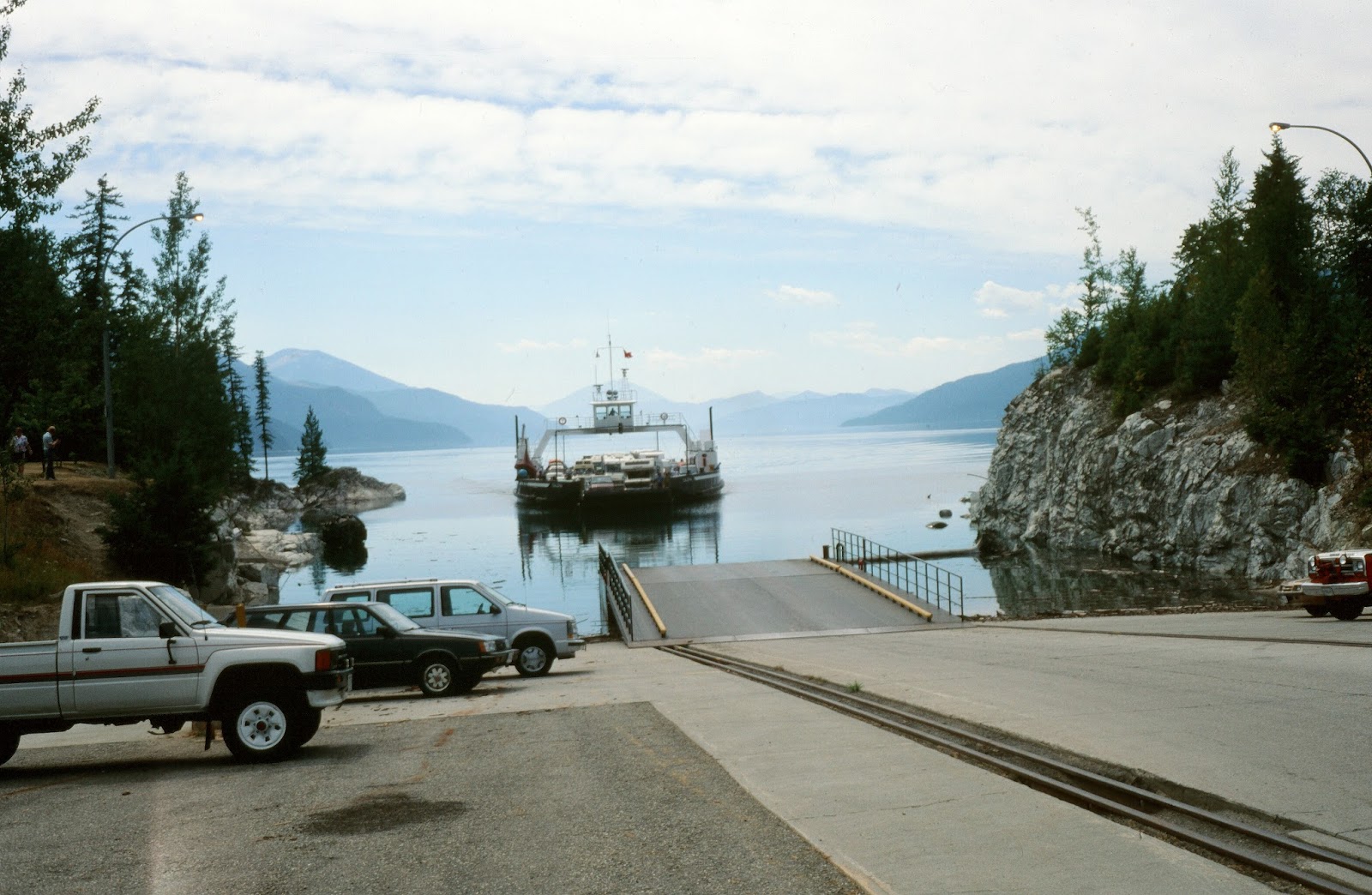
Upper Arrow Lake, British Columbia, Canada, one of two where the few residents and occasional visitors used steamboats to access the shores. It took hours or days to reach a settlement along the lakes, and some boats were equipped with overnight facilities. The Upper Arrow lake shown has a ferry service today  but the lower lake still is difficult to access. The ferry shown is a short distance south of Revelstoke.

To write an interesting story about the Arrow Lakes in the book The Columbia River, I interviewed retired ship captains and passengers. The local stories make a travel book draw a reader into the sites in a far more personal manner than just writing about time tables, physical description of a site, or the management details. Through the eyes of "John Smith" the reader is transported into the site mentally and emotionally. 

Yet it is true that travelers want to know where to eat or stay, and such necessary details. My publisher dealt with such mundane matters by suggesting four chapters in the book of "Travel and Trivia" to avoid cluttering up the historical text. As a writer it was necessary to investigate personally the details of an area so that the book would suggest suitable sites. This meant, as well, that the book inevitably would need occasional updating . I pointed out  the story of a 1200+ river in one book would need care in making real the tales of its past. Siphoning off practical information achieves this and often identifies other books that may focus on topics of a reader's particular interest .For us the writers it is important to keep a main theme flowing smoothly.

Tuesday, April 5, 2016

#5/ ARTICLES AND BOOKS NEED PHOTOS, TOO

Roe basking in the Canadian sun before going off to research Columbia Lake.

So far I have talked about writing a book. In today's world a writer needs to become proficient with photography, too. In my case, I took lessons in Los Angeles and Hollywood in how to take good photos and also adjust the film in Photoshop or the program that comes with your camera's picture storage. In more advanced photo adjustment one sometimes wishes to take out a tree or some object on the image, .One time I photographed a horse and did not notice until I printed the image that he had five legs because of a post behind him. Obviously , this was OK, but -- in some cases -  clients (magazines, newspapers,some books and contests) view tampering with your image not popular or simply to be prevented, especially images with scenery. Color and saturation matters, straightening the image, and such are often desirable. It's sort of like cleaning your house before the guests arrive.

Today's cameras are so universally excellent that one can scarcely take bad images, but do take some instruction in the ART of pictures, the mood of the images, is the scene to stay far off or should you take a closer view. If so, you may need to use a tripod or set the camera on a fixed surface. Adjusting our camera to move in on an image with more detail can result in fuzzy images if you do not  control all movement of the camera.

The old saying is that a picture is equal to a thousand words may be the case, especially for moving subject such as a train, sports figure, animal flight, and you should be sure to set your camera for the intended image -- even though many cameras, even inexpensive ones, do include an anti-motion factor.  Sometimes control of the movement helps the image. I recall a photo taken in Patagonia of a closeup cow and calf running past me very fast, where leaving a modest blur of speed across the printed image was a plus.

In this section of the Columbia River we are now researching, grizzly bears are common but the rushing water of the river itself may be the close focal point to match its deep canyon, very swift passage.  Try it both ways. Why not -- all you need to do is delete a digital image if you don't think the image "says anything."